Beta-Caryophyllene Benefits: Fibrosis, Inflammation and Wound Healing

Updated: Oct 19
Explore beta-caryophyllene benefits being studied for inflammation, fibrosis, collagen remodeling and wound healing. Learn how CB2 receptor signaling and nanoencapsulation may influence these processes in preclinical research.
What Is Beta-Caryophyllene, and What Does It Do?
Beta-caryophyllene (BCP) is a naturally occurring 15-carbon terpene oil found in cloves, black pepper, hops, rosemary, and other aromatic plants. It is a signaling molecule that activates cannabinoid type 2 (CB2) receptors within the endocannabinoid system. These receptors help regulate immune responses, inflammation, and cellular signaling. Unlike THC, BCP does not cause intoxication.

What Are the Beta-Caryophyllene Benefits Being Studied?
Laboratory and animal research has investigated beta-caryophyllene benefits including anti-inflammatory activity, antioxidant protection, immune regulation, wound healing, and potential antifibrotic effects. These experimental findings do not yet establish benefits for treating human fibrotic disease.

How Does Beta-Caryophyllene Reduce Inflammation?
Inflammation starts the healing process, but persistent inflammation can harm tissue and contribute to scarring. Through CB2 receptor signaling and other pathways, BCP may modulate NF-kappaB activity, inflammatory cytokines such as TNF-alpha, IL-1beta, and IL-6, and oxidative stress. This offers a plausible mechanism for regulating inflammatory responses, though effects in humans require further study.

Can Beta-Caryophyllene Reduce Fibrosis and Scar Tissue?
Fibrosis occurs when excessive collagen and extracellular matrix accumulate during abnormal tissue repair. Persistent injury activates fibroblasts and myofibroblasts; transforming growth factor-beta (TGF-beta) is a major driver of this response. In a 2012 rat liver study, BCP reduced fibrosis and expression of genes associated with collagen production and fibrotic signaling. A 2025 rat study also reported protection against experimentally induced liver fibrosis through pathways involving CB2 and TGF-beta/SMAD signaling.

Does Beta-Caryophyllene Promote Wound Healing?
Successful wound healing requires inflammation, cell migration, collagen formation, and remodeling. In a 2019 mouse study, topical BCP enhanced re-epithelialization in female mice, with associated changes in migration and proliferation. Other animal research reported improvements in inflammatory regulation and collagen deposition. These are preclinical wound-healing findings, suggestive of faster healing in patients.

How Can BCP Reduce Fibrosis While Supporting Collagen?
Collagen is essential for closing wounds and restoring strength. Pathological fibrosis, however, involves excessive or persistent collagen accumulation that disrupts normal tissue. BCP has been associated with greater collagen deposition during experimental skin repair and reduced abnormal collagen accumulation in liver and lung fibrosis models. Its effects appear to depend on the tissue and injury context.
How Does Nanoencapsulation Improve BCP Bioavailability?
Raw beta-caryophyllene is poorly water-soluble and can have limited, variable oral bioavailability. Estimates below 10% have been discussed for some conventional formulations. Nanoencapsulation can protect BCP from degradation and improve dispersion and absorption. Lipid-based nanoformulations may promote intestinal lymphatic transport and reduce first-pass metabolism, potentially improving systemic exposure. Lymphatic delivery and high bioavailability have been demonstrated for several formulations.

Is Beta-Caryophyllene Safe?
BCP is present in commonly consumed spices and generally regarded as safe by the FDA as a food flavoring. And animal studies have not shown any adverse effects or toxicity in doses up to 2000 mg/kg. Nanoencapsulated products clearly lead to improved bioavailability over ordinary dietary intake. Nevertheless, human evidence is insufficient to establish a therapeutic dose, long-term safety, drug interactions, or clinical efficacy for fibrosis and wound healing.
Conclusion: Beta-Caryophyllene and Tissue Healing
Beta-caryophyllene appears to influence inflammation, collagen remodeling, fibrosis, and wound healing through CB2 receptor signaling and other biological pathways.
Scientific References
Gertsch J et al. (2008). Beta-caryophyllene is a dietary cannabinoid. PNAS. https://doi.org/10.1073/pnas.0803601105
Koyama S et al. (2019). Beta-caryophyllene enhances wound healing through multiple routes. PLOS ONE. https://doi.org/10.1371/journal.pone.0216104
The antioxidant effect of beta-caryophyllene protects rat liver from carbon tetrachloride-induced fibrosis by inhibiting hepatic stellate cell activation (2012). https://pubmed.ncbi.nlm.nih.gov/22717234/
Bader Eddin L et al. (2025). Beta-Caryophyllene Ameliorates Thioacetamide-Induced Liver Fibrosis in Rats. https://doi.org/10.3390/ijms26178493
BCPlus Oral Liposomal Drops — 60 mL
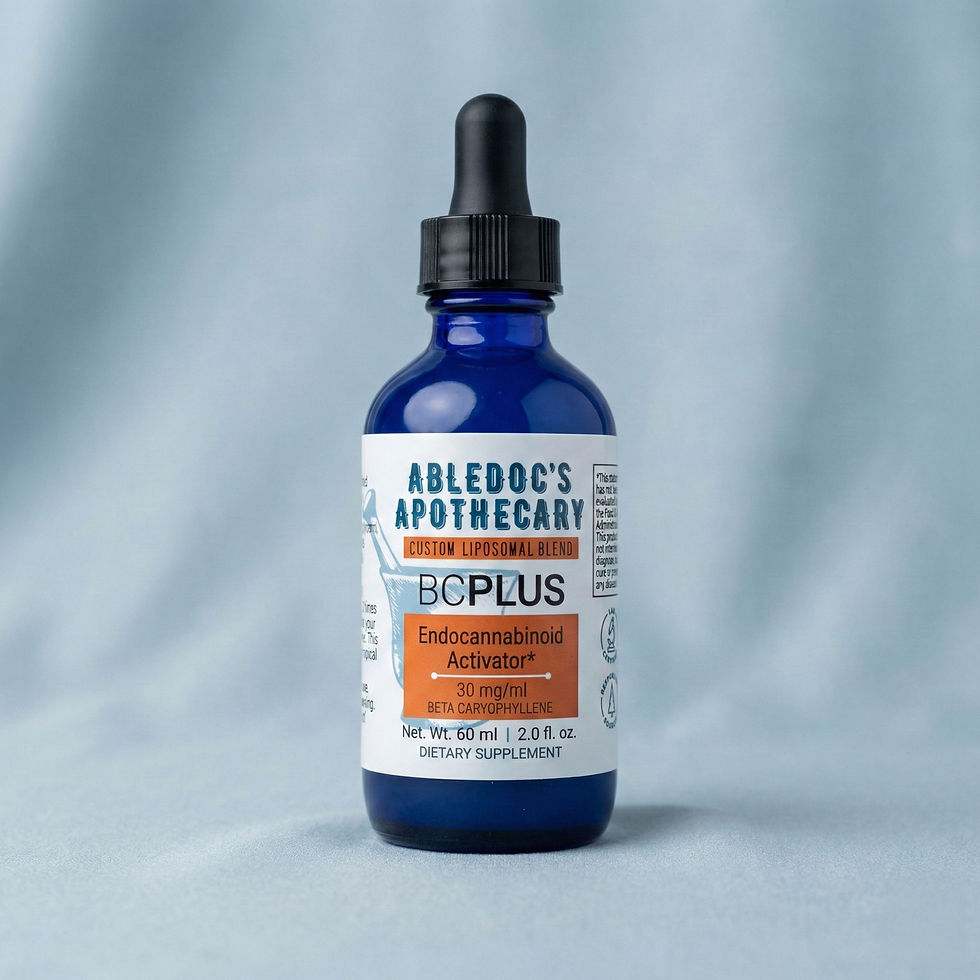
60 mL • $75.00 • In stock


Comments