PTSD and Chronic Pain in Veterans: Understanding the Connections

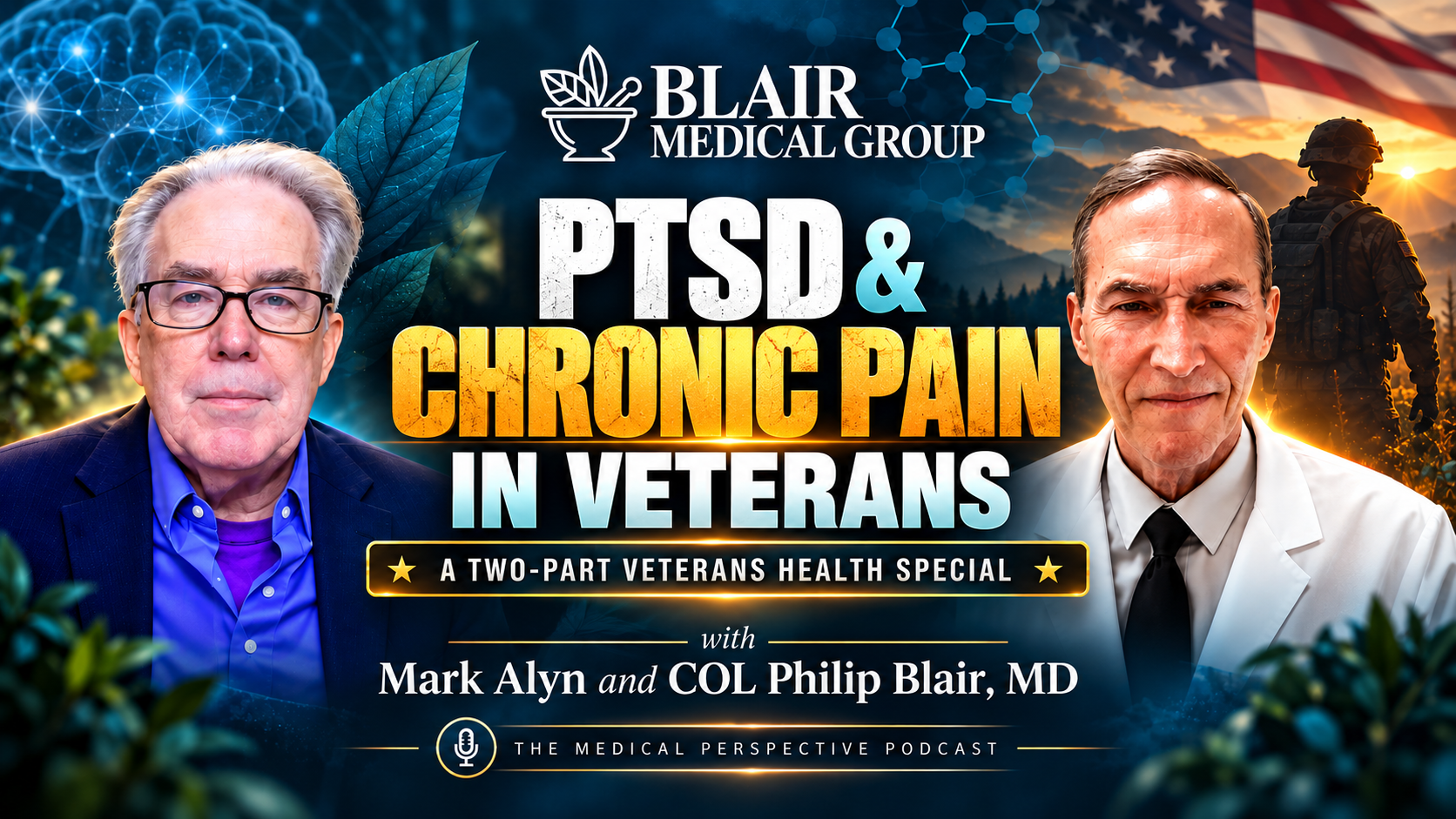
Beyond Service — A Two-Part Veterans Health Special with COL Philip Blair, MD, and Mark Alyn
What happens when the effects of military service continue long after someone returns home?
For some veterans, those challenges include post-traumatic stress disorder (PTSD), persistent physical pain, sleep problems, emotional distress and difficulties adjusting to everyday life. These experiences can overlap, making it harder to understand where one health problem ends and another begins.
But the questions they raise extend beyond military service. People from many backgrounds experience chronic pain, prolonged stress, disturbed sleep and health concerns that affect more than one part of the body.
PTSD and chronic pain can influence one another. Pain may heighten stress and interfere with sleep, while trauma-related symptoms can make pain harder to manage. Understanding these connections can help people ask better questions and find more coordinated care.
In this two-part Veterans Health Special from The Medical Perspective Podcast, host Mark Alyn speaks with COL Philip Blair, MD, a physician and retired military colonel with 27 years of service.
Together, they explore veteran health challenges, established approaches to care, and developing scientific research into inflammation, the endocannabinoid system and beta-caryophyllene (BCP).
The first conversation focuses on PTSD and chronic pain. The second broadens the discussion to the biological systems involved in inflammation, digestion, metabolism and whole-body health.
Explore the conversations
Episode 1: PTSD, Chronic Pain & the Search for Better Veteran Care
Episode 2: BCP, Gut Health, Metabolism & Whole-Body Wellness
Why PTSD and Chronic Pain Often Overlap in Veterans
Pain is usually understood as a physical sensation. PTSD is typically associated with psychological trauma. Yet the two conditions can affect each other in important ways.
Chronic pain persists beyond the expected healing period or continues for months. It can follow an injury, develop alongside another condition, or occur without a single clearly identifiable cause.
PTSD may develop following exposure to a traumatic event. Symptoms can include intrusive memories, nightmares, heightened alertness, avoidance, negative changes in mood and difficulty sleeping.
For some veterans, physical injuries and psychological trauma arise from the same experience. For others, the connection is more complicated.
How can PTSD affect the experience of pain?
Our nervous system helps us recognize threats and respond to them. After traumatic experiences, that response can remain unusually sensitive.
A person experiencing PTSD may become highly alert to signs of danger, changes in physical sensations or reminders of a traumatic event.
Pain itself can become a source of distress. The anticipation of pain may affect movement, activity and participation in everyday life.
Research also suggests that increased sensitivity within the nervous system can contribute to some persistent pain experiences.
Can chronic pain make PTSD symptoms worse?
Yes. The relationship can work in both directions.
Living with persistent pain can interfere with sleep, limit activity, increase frustration and affect social relationships. Those difficulties may make existing PTSD symptoms harder to manage.
At the same time, trauma-related hypervigilance, avoidance and disturbed sleep can complicate the experience and treatment of pain.
The VA National Center for PTSD describes how these two conditions can exacerbate one another and why coordinated care matters.
An important point is that chronic pain is real, whether or not a current injury fully explains its severity. Understanding the nervous system's role in pain does not mean that pain is imaginary or simply psychological.
Watch Episode 1: PTSD, Chronic Pain & the Search for Better Veteran Care
The Medical Perspective Podcast — Mark Alyn with COL Philip Blair, MD
In the first episode, Dr. Blair draws on his military medical background and clinical interests to discuss the lasting effects of trauma and the challenges veterans may encounter when seeking care.
The conversation begins with PTSD: how traumatic experiences can affect emotional regulation, sleep, behavior and everyday functioning.
Dr. Blair and Mark Alyn also explore why some veterans may hesitate to acknowledge symptoms or seek help. Concerns about stigma, personal identity and professional consequences can make these conversations difficult.
The interview addresses established approaches to care, including professional assessment, counseling, cognitive behavioral therapy, medication and lifestyle considerations.
It also examines chronic and neuropathic pain, including persistent symptoms following injuries and amputation-related phantom limb pain.
Another important part of the discussion concerns the risks of trying to manage unresolved symptoms through alcohol, opioids or other substances without appropriate medical support.
Dr. Blair introduces the endocannabinoid system and his interest in beta-caryophyllene, laying the foundation for the second episode.
Why watch this conversation?
It offers a physician's perspective on why PTSD and chronic pain deserve attention together, while recognizing the personal and practical challenges that can make seeking care difficult.
PTSD, Sleep Problems and Everyday Health
Sleep disturbances are among the health challenges frequently discussed in connection with PTSD.
Some people have trouble falling asleep. Others awaken repeatedly, experience distressing dreams or remain unusually alert even in a safe environment.
Sleep problems can also complicate life with chronic pain.
Poor sleep may leave a person less rested, reduce their ability to participate in activities and make the following day more difficult.
For veterans experiencing PTSD, sleep problems may become persistent concerns in their own right rather than improving automatically when other symptoms improve.
The VA identifies chronic insomnia and nightmares as important clinical concerns for people with PTSD. Sleep-focused assessment and treatment may be appropriate, including cognitive behavioral therapy for insomnia.
This matters to families as well. Understanding that disrupted sleep can have multiple causes may help loved ones respond with greater patience while encouraging appropriate evaluation.
Not every sleep problem is caused by PTSD. Conditions such as sleep apnea, medication effects and other medical concerns may require separate assessment.
Gulf War Illness and Long-Term Health Concerns
Dr. Blair's military service includes the 1990–1991 Gulf War, when personnel encountered a range of environmental conditions and potential exposures.
In Episode 1, he discusses experiences from that period and his interest in the long-term health questions involving Gulf War veterans.
One subject is Gulf War illness, also described in medical literature as chronic multisymptom illness.
What is Gulf War illness?
Gulf War illness refers to a group of persistent symptoms reported by some veterans who served in relevant deployment areas.
According to the Department of Veterans Affairs, reported symptoms can include fatigue, muscle and joint pain, headaches, memory or concentration difficulties, digestive problems, sleep disturbances and other concerns.
Symptoms vary between individuals, and the underlying causes remain subjects of research.
Gulf War illness is not interchangeable with PTSD. The conditions have different clinical contexts, although a veteran may experience more than one health problem.
This distinction matters because symptoms such as fatigue, pain or poor sleep can have many possible explanations. Appropriate medical evaluation helps identify treatable conditions and determine what further assessment may be needed.
The VA maintains information about Gulf War-related illnesses, potential exposures, eligibility for healthcare and available examinations.
For veterans who have lived with unexplained symptoms for years, continued attention to these concerns remains important well beyond Veterans Day.
What Does Established Care for PTSD and Chronic Pain Look Like?
Although PTSD and chronic pain can be complicated to manage together, established treatment approaches are available.
For PTSD, the VA/DoD clinical practice guideline recommends specific trauma-focused psychotherapies, including Cognitive Processing Therapy, Prolonged Exposure and Eye Movement Desensitization and Reprocessing.
Medication may also be appropriate for some individuals following clinical evaluation and shared decision-making.
Chronic pain management may involve physical rehabilitation, carefully planned activity, psychological approaches to pain, medication when appropriate and treatment of any underlying medical condition.
The right combination depends on the individual.
For someone experiencing both PTSD and pain, communication between healthcare professionals can be especially valuable.
A pain specialist may focus on movement, function and daily activity, while a mental health professional addresses trauma-related symptoms. Coordinated care can help prevent conflicting recommendations and support a more manageable plan.
Other aspects of daily health—such as sleep, nutrition, physical activity and social connection—can be relevant to overall functioning.
These are not substitutes for professional treatment. They are components that may support a broader, individualized care plan.
The goal is not always the immediate elimination of every symptom. Improving function, supporting relationships and helping people participate more fully in life can also be important measures of progress.
What Is the Connection Between PTSD and Inflammation?
The relationship between stress and the body involves more than thoughts and emotions.
When a person encounters a threat, the nervous system and hormonal stress response help prepare the body to respond.
The immune system is also involved in signaling processes that affect how the body reacts to injury, infection and other challenges.
Inflammation is a normal biological process with important protective functions. Problems can arise when inflammatory activity becomes dysregulated or persists inappropriately.
What are researchers investigating?
Researchers have examined whether people with PTSD show differences in inflammatory markers compared with people without PTSD.
Some studies have reported associations between PTSD and changes in immune signaling. However, results vary across studies, populations and individual markers.
A 2026 systematic review and meta-analysis reported higher average levels of C-reactive protein, an inflammatory marker, among PTSD participants than comparison groups. The researchers also identified important limitations in determining how inflammation relates to trauma over time.
These findings raise scientific questions about the relationships among stress, immune activity and physical health.
They do not establish that inflammation explains every case of PTSD, nor do they prove that reducing inflammation will treat the disorder.
That difference between identifying a biological association and demonstrating an effective treatment is essential.
The broader scientific question is how the body's various signaling systems interact—and whether understanding those interactions may eventually contribute to better approaches to care.
This leads into the second conversation.
Watch Episode 2: BCP, Gut Health, Metabolism & Whole-Body Wellness
The Medical Perspective Podcast — Mark Alyn with COL Philip Blair, MD
The second episode expands the discussion from specific veteran-health challenges to the biological systems involved in whole-body function.
Dr. Blair explains his research interest in beta-caryophyllene, a naturally occurring plant compound studied for its interaction with the cannabinoid receptor CB2.
The conversation explores inflammatory signaling, the intestinal lining, the gut microbiome, metabolic regulation and the relationships among physical health, nutrition and everyday well-being.
It also addresses Dr. Blair's interest in BCP-containing formulations and the scientific questions surrounding their delivery and potential effects.
Other topics include dietary patterns, fermented foods, physical activity, glucose regulation, weight management and conventional medication approaches.
The discussion considers questions involving GLP-1 medications and other treatments, while exploring how scientific knowledge continues to develop.
Throughout the episode, it is important to distinguish established findings from developing hypotheses and clinical observations.
Why watch this conversation?
It introduces the biological pathways researchers are investigating and helps explain why BCP and the endocannabinoid system have become subjects of scientific interest.
The discussion is relevant to anyone interested in inflammatory biology, metabolism or the relationship between different aspects of health—not only veterans.
What Is Beta-Caryophyllene?
Beta-caryophyllene, commonly abbreviated BCP, is a naturally occurring terpene found in aromatic plants such as cloves, black pepper, rosemary and hops.
A terpene is a type of plant-produced compound. Terpenes are often associated with a plant's aroma, but many are also studied for their biological activity.
BCP is notable because researchers have demonstrated that it can interact with a receptor known as CB2.
Understanding the endocannabinoid system
The endocannabinoid system is a network of signaling molecules, receptors and enzymes involved in regulating aspects of normal physiology.
Two receptors commonly discussed in this system are CB1 and CB2.
CB1 receptors are especially prominent in the nervous system and are associated with many of the psychoactive effects of THC.
CB2 receptors are involved in immune signaling and other biological processes.
The distinction matters when discussing beta-caryophyllene.
Why are scientists interested in BCP and CB2?
In a foundational study published in 2008, researchers demonstrated that beta-caryophyllene binds to and activates CB2 receptors.
The study included receptor and cellular experiments and an experimental mouse model of inflammation.
These findings helped establish BCP as a compound of interest in cannabinoid-receptor research.
BCP is considered non-intoxicating, and its CB2 activity differs from the CB1-mediated psychoactive effects associated with THC.
However, activating a receptor in laboratory experiments is not the same as demonstrating a clinical treatment benefit in people.
The original study does not establish that BCP treats PTSD, chronic pain or Gulf War illness.
Further research must determine how findings from experimental models relate to human health, particular formulations and clinical outcomes.
For more background, see Blair Medical Group's guide to beta-caryophyllene research.
Gut Health, Metabolism and the Broader Picture
The second interview also considers the relationship between digestive health, nutrition and metabolic function.
These subjects may initially seem unrelated to the discussion of veteran health.
However, daily well-being involves many interacting systems.
The digestive tract processes nutrients and interacts with the immune system. The gut microbiome consists of microorganisms that participate in numerous biological processes.
Metabolism involves the ways the body uses and stores energy. Nutrition, physical activity, sleep and certain health conditions can influence metabolic function.
Dr. Blair discusses these areas while exploring his broader interest in inflammatory signaling and the potential relevance of BCP research.
The conversation includes fermented foods, probiotics, carbohydrates, movement after meals, weight management and the mechanisms of certain prescription medications.
These topics can help listeners understand the kinds of questions researchers ask when investigating whole-body health.
They should not be interpreted to mean that one biological pathway—or one supplement—can correct every underlying problem.
For people managing metabolic conditions or taking prescription medication, individual medical guidance remains important.
What Does the Research Establish—and What Is Still Unknown?
When evaluating an emerging health-related compound, it helps to separate different kinds of evidence.
Laboratory and receptor studies examine how a substance behaves under controlled experimental conditions.
Animal studies help researchers investigate biological responses in living systems. Their results cannot automatically be applied to people.
Human clinical studies examine particular interventions in people, using defined populations, amounts, formulations, comparison groups and measured outcomes.
Each type of research contributes information, but the conclusions are not interchangeable.
For beta-caryophyllene, research has established interaction with CB2 receptors and identified biological effects in experimental models.
There is also human research involving selected BCP formulations and outcomes, although that evidence is limited and does not establish broad treatment claims.
The question is not simply whether BCP has biological activity. Researchers must also establish whether a specific formulation produces meaningful clinical effects in people, under what circumstances, and with what safety considerations.
BCP is not an established treatment for PTSD, Gulf War illness or chronic pain.
It should not be presented as a replacement for evidence-based care or a reason to stop prescribed medication.
These distinctions are especially important when discussing research alongside products.
To learn more about formulation differences, ingredient quantities and responsible use, read Blair Medical Group's BCP supplements and formulation guide.
Why These Conversations Matter Beyond Veterans Day
Veterans Day provides an opportunity to recognize those who have served and the families who support them.
It is also an opportunity to discuss health concerns that may not be visible to others.
Persistent pain can affect relationships, movement, mood and everyday functioning. Sleep disruption can make ordinary activities more difficult. Stress and emotional distress may become intertwined with physical symptoms.
Understanding these connections does not mean every person will have the same experience or require the same kind of care.
It means listening carefully, asking informed questions and recognizing that complex health concerns may require more than one perspective.
Veterans' experiences are central to this two-part series, but the underlying questions have broader relevance.
The conversations encourage curiosity about how the body works while recognizing the continuing importance of established medical care and responsible scientific investigation.
Frequently Asked Questions
Can PTSD and chronic pain make each other worse?
Yes. PTSD and chronic pain can affect one another through stress responses, heightened attention to symptoms, disturbed sleep, avoidance and changes in everyday activity.
The relationship is complex, and people experience it differently. Coordinated evaluation and care can help address both conditions.
Why do some veterans have ongoing sleep problems?
Sleep disruption may be associated with PTSD, persistent pain or a separate medical issue.
Insomnia, nightmares and other sleep concerns deserve appropriate assessment rather than being assumed to have a single cause.
What symptoms are associated with Gulf War illness?
Symptoms may include persistent fatigue, muscle and joint pain, memory or concentration difficulties, headaches, digestive problems and sleep disturbances.
Because these symptoms can occur with other conditions, medical evaluation is important.
Is inflammation responsible for PTSD?
Research has identified associations between PTSD and certain inflammatory markers, but the relationships are not fully understood.
Current findings do not establish inflammation as the sole cause of PTSD or demonstrate that an anti-inflammatory supplement treats it.
What is the relationship between beta-caryophyllene and CB2 receptors?
Laboratory studies show that beta-caryophyllene interacts with and activates CB2 receptors, which participate in immune-related signaling.
This provides a basis for research, but does not by itself establish clinical treatment effectiveness.
Can BCP replace medication or professional care?
No. The evidence currently available does not support replacing established treatment for PTSD, chronic pain or other diagnosed conditions with BCP.
People considering supplements alongside prescription medications should discuss potential interactions and individual considerations with a qualified healthcare professional.
Resources for Veterans, Families and Caregivers
Reliable information and professional support can help people better understand their options.
VA National Center for PTSD
Information about PTSD symptoms, diagnosis, treatment and support resources for veterans and their families.
VA Chronic Pain and PTSD
An evidence-based discussion of how the conditions interact and why coordinated treatment matters.
VA Gulf War Veterans' Illnesses
Resources about Gulf War-related illnesses, possible exposures and available VA services.
Veterans Crisis Line
For a veteran or service member experiencing an emotional or mental health crisis, confidential support is available 24 hours a day.
Dial 988 then Press 1, or visit VeteransCrisisLine.net.
Veterans and their families do not have to navigate difficult health questions without support.
About the Speakers
COL Philip Blair, MD
COL Philip Blair, MD, is a physician and retired military colonel with 27 years of military service.
His experience includes medical service during the Gulf War. His clinical and research interests include chronic pain, inflammatory biology, the endocannabinoid system and beta-caryophyllene.
Through Blair Medical Group, Dr. Blair promotes education about BCP and the scientific research surrounding its biological activity and formulation.
Mark Alyn
Mark Alyn hosts The Medical Perspective Podcast, bringing medical professionals into accessible conversations about healthcare, research and questions that affect everyday life.
In this Veterans Health Special, he guides the discussion from the realities of veteran care to broader scientific subjects of interest to both military and civilian audiences.
Continue Exploring the Research
For readers interested in learning more about the topics introduced in these conversations, Blair Medical Group provides additional educational material:
These resources explain research findings, evidence limitations and differences between BCP formulations.
The goal is to make scientific information easier to understand and help readers distinguish promising research from established clinical practice.
Medical Information and Research Disclosure
This article and the accompanying interviews are intended for education and discussion. They are not a substitute for individualized medical advice, diagnosis or treatment.
The conversations include clinical observations, scientific hypotheses, experimental research and discussion of products associated with Blair Medical Group.
Statements about investigational applications of beta-caryophyllene should not be interpreted as established clinical outcomes. Laboratory findings, animal research and observations involving individual patients do not establish that a BCP product treats a medical condition.
BCP is not an approved or established treatment for PTSD, Gulf War illness, chronic pain, obesity, dementia or Parkinson's disease.
People managing health conditions, taking prescription medication or considering changes to treatment should seek advice from qualified healthcare professionals.
A Veterans Day Thank-You From Blair Medical Group
November 10–12, 2026
Thank you for taking the time to explore these conversations.
Whether you are a veteran, a family member, a caregiver, or someone interested in understanding your own health more deeply, we appreciate your curiosity and your commitment to learning.
To mark Veterans Day, Blair Medical Group is offering a special three-day thank-you.
30% Off All Products
Your Veterans Day thank-you code:
VETERANS30
Valid November 10–12, 2026
Enter the code at checkout to receive 30% off your purchase during the promotional period.
Take time to review the different product formats, ingredients and directions so that you can make an informed choice.
This limited-time offer is a gesture of appreciation, not a medical recommendation. BCPlus products are not established treatments for PTSD or the other medical conditions discussed in this article.


Comments