Inside BCPlus Immunity Blend: Ingredients and Formulation

Updated: Oct 19

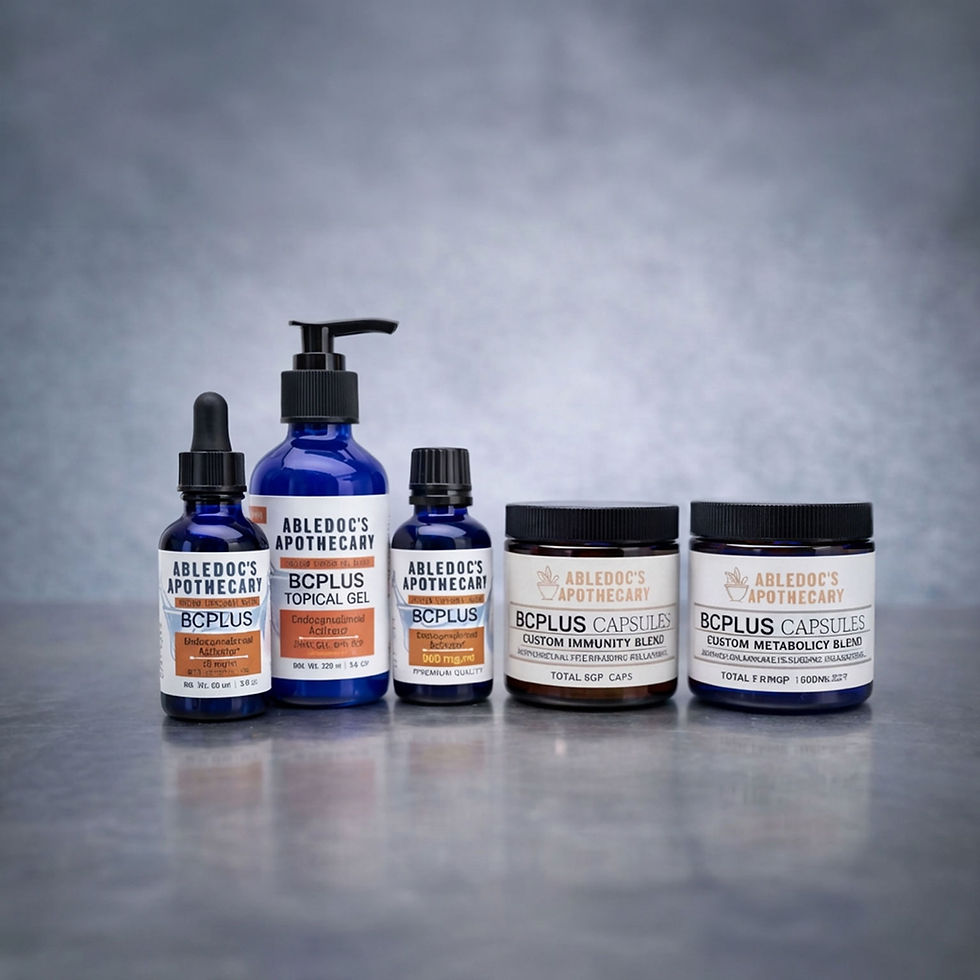
The formula combines BCP, turmeric, ginger, curcumin, and piperine.
Each capsule contains a measured combination of the formulation's plant-derived ingredients.
Oxidative stress is an imbalance between free radicals and antioxidants in your body.Free radicals are oxygen-containing molecules with an uneven number of electrons. *Antioxidantsare molecules that can donate an electron to a free radical without making themselves unstable. This causes the free radical to stabilize and become less reactive.
Our water-soluble nano BCP powder molecules are blended with the physician-formulated, proprietaryImmunity Blendand pressed into a vegetarian, enteric-coated capsule, which increases bioavailability by creating a delayed release. Thanks to this process, ingredients make it through the stomach to the small intestine or other stages in digestion to be metabolized.
Turmeric and ginger contain compounds studied in inflammatory and oxidative signaling.
UNDERSTANDING Ingredients:
Beta-caryophyllene ( BCP) is a natural substance that is found in many common food plants, such as hops, cloves, black pepper, oregano, cinnamon, rosemary and basil. BCP is FDA-listed for food use and has FEMA GRAS status.
Our beta-caryophyllene blends are derived from hops, cloves or allspice. The formula combines BCP, turmeric, ginger, curcumin, and piperine.
measured oral capsule format.
What is TURMERIC?
Turmeric and ginger contain compounds studied in inflammatory and oxidative signaling.
Turmeric, a plant in the ginger family, is native to Southeast Asia and is grown commercially in that region, primarily in India. Its rhizome (underground stem) is used as a culinary spice and traditional medicine.
Historically, turmeric was used in Ayurveda and other traditional Indian medical systems, as well as Eastern Asian medical systems such as traditional Chinese medicine. In India, it was traditionally used for disorders of the skin, upper respiratory tract, joints, and digestive system.
Turmeric is a common spice and a major ingredient in curry powder. Curcumin is a major component of turmeric, and the activities of turmeric are commonly attributed to curcuminoids (curcumin and closely related substances). Curcumin gives turmeric its yellow color.
What is CURCUMIN?
Curcumin is a bright yellow chemical produced by plants of the Curcuma longa species. It is the principal curcuminoid of turmeric, a member of the ginger family
Curcumin is the main active ingredient in turmeric. Curcumin has reduced inflammatory and oxidative markers in multiple studies. These compounds are called curcuminoids.
Curcumin is poorly absorbed into your bloodstream. In order to experience the full effects of curcumin, itsbioavailability(the rate at which your body absorbs a substance) needs to improve. It helps to consume it withblack pepper, which contains piperine. Piperine is a natural substance that enhances the absorption of curcumin. In fact, the best curcumin supplements contain piperine, and this makes them substantially more effective.
What is PEPERINE?
Long hailed as the “king of spices,” black pepper is a staple seasoning in many households around the globe. Its distinct flavor is due to the presence of piperine, a compound that has been linked to a long list of health benefits. Because most of us only enjoy a dash or two of black pepper with each meal, some people opt to take a piperine supplement to boost their intake.
Piperine isan alkaloid present in black pepper(Piper nigrum), one of the most widely used spices, inlong pepper(Piper longum), and other Piper species fruits belonging to the family of Piperaceae. Piperine is responsible for the black pepper's distinct biting quality.
Piperine has been shown to increase the absorption of several nutrients and beneficial plant compounds. Studies show that piperine canincrease the absorptionof curcumin by up to 2,000%.
What is GINGER?
Ginger is a flowering plant whose rhizome, ginger root, or ginger, is widely used as a spice and a folk medicine.
Native to parts of Asia, such as China, Japan, and India, ginger has a leafy stem and yellowish-green flowers. The spice comes from the rhizome (underground stem) of the plant.
Ginger has been used for medicinal purposes in China for more than 2,500 years, and it has had a prominent role in Chinese, Indian, and Japanese medicine since the 1500s.
It’s been used to aid digestion, reduce nausea, and help fight the flu and common cold, to name a few of its purposes. The unique fragrance and flavor of ginger come from its natural oils, the most important of which is gingerol. Gingerol is the main bioactive compound in ginger. It’s responsible for many of ginger’s medicinal properties.
Gingerol has powerful anti-inflammatory andantioxidanteffects, according toresearch. For instance, it may help reduceoxidative stress, which results from having too many free radicals in the body.
Ginger’s antimicrobial properties could make it useful for fighting bacterial and fungal infections.
BENEFITS:
Curcumin, the active compound in turmeric, and terpenes like Beta-Caryophyllene (BCP) both have demonstrated interactions with the ECS. Curcumin influences the ECS by regulating the activity of endocannabinoids and their receptors, particularly CB1 and CB2 receptors, which are crucial components of this system. These interactions play a role in modulating various physiological processes, including inflammation, pain perception, and immune response.
Both BCP and Turmeric are associated with strengthening the immune system. Their combined effects, enhanced by black pepper, can help your body better defend against infections and illnesses.
Inflammatory Signaling Research
Curcumin has reduced inflammatory and oxidative markers in multiple studies. Research reveals this powerhouse compound can offer protection at the molecular level – perhaps even matching the effectiveness of some commonly used anti-inflammatories without their related side effects.
Research on these ingredients includes inflammatory signaling, circulation-related biology, and lipid metabolism.
Joint and Sensory Signaling Research
Turmeric and curcumin have been studied in relation to joint comfort and inflammatory signaling. Findings vary by formulation and study design, and ingredient research should not be interpreted as evidence that the finished BCPlus Immunity Blend treats pain or joint disease.
Research on these ingredients includes CB2, inflammatory, and sensory signaling.
Neurological Research
A recent landmark study found that turmeric promotes the production of brain-derived neurotrophic factor (BDNF), a growth hormone responsible for youthful brain function.
Ginger compounds such as 6-shogaol and 6-gingerol are studied across neurological and cellular research.
Oxidative stress andchronic inflammationmay be key drivers ofAlzheimer’s diseaseand age-related cognitive decline.
Research areas include neurological signaling and cognitive biomarkers.
Skin and Cosmetic Research
Turmeric has been shown to inhibit a key enzyme that can reduce elastin formation in the body.**Elastin, in tandem with collagen, is skin’s main structural protein responsible for smooth, plump, supple skin.
These ingredients are also examined in skin and oxidative-stress research.
Increase the antioxidant capacity of the body
Free radicals tend to react with important organic substances, such as fatty acids,proteins, or DNA. The main reason antioxidants are so beneficial is that they protect your body from free radicals. Curcumin is a potent antioxidant that canneutralize free radicalsdue to its chemical structure.
Research on BCP includes CB2 signaling and multiple areas of cellular biology.
Digestive Support
Research on these ingredients includes gastrointestinal and inflammatory signaling.
UNDERSTANDING Enteric Coated Capsules:
Enteric coating is a specialized technique used to protect the active ingredients in the capsules from stomach acid, allowing them to reach the intestines intact for better absorption.
Benefits of Enteric-Coated Capsule Bodies:
Enhanced Bioavailability:Enteric coatings protect the active ingredients from the harsh acidic environment of the stomach, ensuring they remain intact until they reach the more alkaline environment of the small intestine. This leads to improved bioavailability and better absorption of the active compounds.
Reduced Gastric Irritation:Enteric-coated capsules can be gentler on the stomach, reducing the risk of gastrointestinal discomfort or irritation that can occur when certain supplements are taken on an empty stomach.
Time-Release Effect:Enteric coatings can be designed to release the active ingredients slowly over time, providing a sustained and controlled release of the beneficial compounds for longer-lasting effects.
Protection of Sensitive Ingredients:Certain ingredients, including probiotics and enzymes, are sensitive to stomach acid. Enteric coatings help protect these ingredients until they reach the intestines, where they can exert their effects.
Final Thoughts:
The combination of BCP, Turmeric, and Black Pepper offers a natural and holistic approach to improving health and well-being, supported by scientific research.Use codeCAPSULES10to receive $10 off the first bottle of our newest member of theBCPlusfamily - Immunity Blend Capsules.

Research references
Gertsch et al. (2008): BCP and CB2 receptor activity. Receptor, cell and mouse experiments identified beta-caryophyllene as a selective CB2 agonist and examined its activity in inflammatory signaling.
Shoba et al. (1998): curcumin-piperine pharmacokinetics. Pharmacokinetic experiments in human volunteers and rats examined curcumin with piperine. The human comparison used 2 g curcumin with 20 mg piperine and measured changes in circulating curcumin.


Comments