Liposomal Beta-Caryophyllene: How the Delivery Format Works

Updated: Oct 19
What is liposomal beta-caryophyllene?
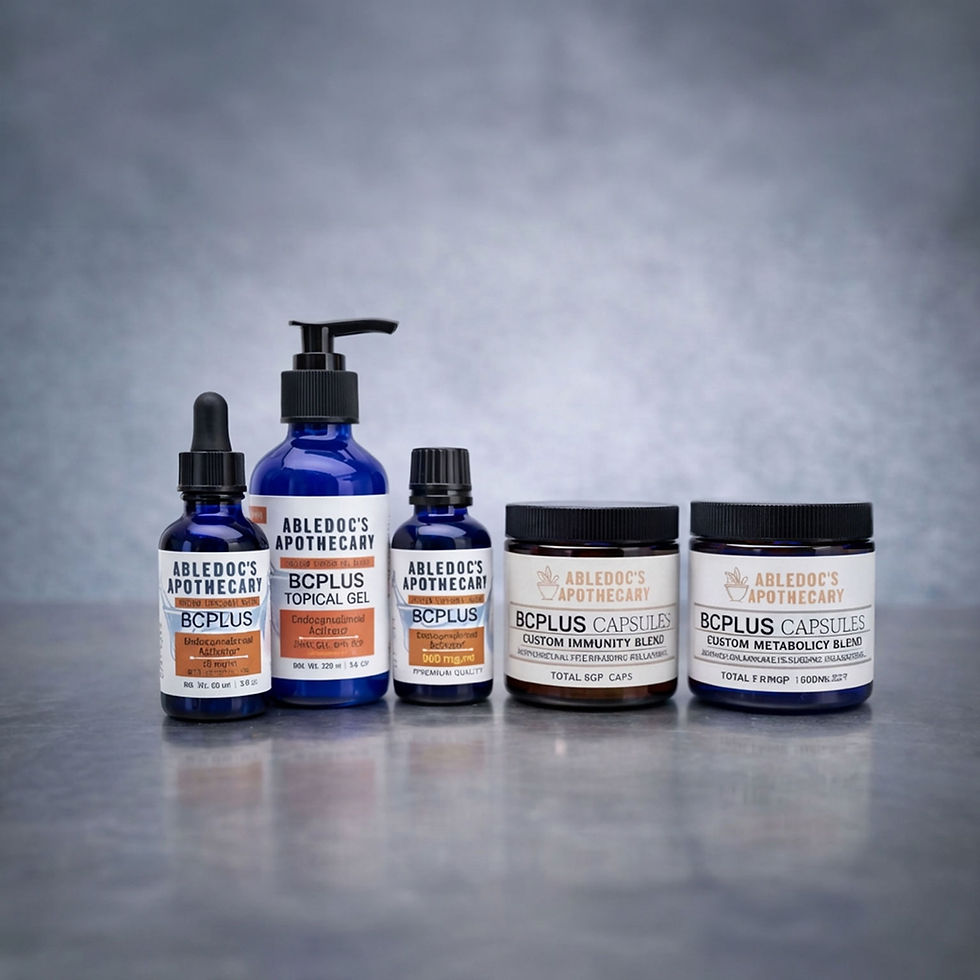
Liposomal beta-caryophyllene (BCP) combines a plant-derived ingredient with microscopic lipid carriers called liposomes. This format is designed to disperse BCP in a liquid formulation. BCPlus Oral Liposomal Drops use clove-derived BCP in a water-dispersible format for measured oral use.
The delivery format is one part of a formulation, alongside its ingredients, concentration and intended route of use. For an overview of the available options, compare BCPlus oral and topical formats.
How do liposomes carry an ingredient?

Liposomes contain one or more phospholipid bilayers surrounding a water-based interior. Phospholipids have water-compatible and lipid-compatible regions. This structure allows formulation scientists to work with ingredients that have different affinities for water and lipids.
A lipid-compatible ingredient can associate with the lipid bilayer, while a water-soluble ingredient can be carried in the aqueous interior. Particle characteristics, ingredient loading and release behavior depend on how the formulation is made. The 2020 review of liposomal nano-encapsulation explains these design principles and their applications in food and nutraceutical formulations.
What does delivery research measure?
Delivery research asks how a particular carrier behaves and whether it changes an ingredient's exposure in the tested setting. Useful comparisons identify the compound, formulation, amount, route, model or population, and measurement method.
Formulation properties: particle characteristics, ingredient loading and stability.
Release and transport: how an ingredient leaves the carrier and moves through the tested environment.
Bioavailability: the rate and extent of systemic exposure measured for the specific ingredient and formulation.
Clinical outcomes: separately measured effects in people using the formulation studied.
Absorption varies by ingredient, formulation and route. A result for one liposomal preparation does not establish the same absorption improvement for every liposomal product. Measurements of blood exposure and measurements of health outcomes answer different questions.
The 2022 study of a sublingual liposomal vehicle examined a mucoadhesive delivery formulation and volunteer acceptability. It is useful delivery-vehicle research, rather than an absorption or clinical-outcome trial of BCPlus Oral Liposomal Drops.
How are BCPlus Oral Liposomal Drops formulated?

BCPlus Oral Liposomal Drops contain beta-caryophyllene sourced from cloves in a 60 mL liposomal liquid. The ingredient list includes purified water, natural flavors, non-GMO sunflower lecithin, glycerin, stevia leaf extract and potassium sorbate. Sunflower lecithin supplies phospholipids used in the formulation.
The liquid format supports measured oral use. Review the current product details and label guidance for serving information, and the BCPlus Liposomal getting-started page for practical use information.
How does the liquid format differ from capsules?
Liposomal drops provide an oral liquid format. BCPlus capsules provide a measured capsule format and have their own ingredient combinations and release design. Compare the active ingredient information, serving size, companion ingredients and labeled directions rather than assuming that delivery formats are interchangeable.
Use the BCPlus formulation comparison to review the current oral and topical products side by side.
Research references
Review — An overview of liposomal nano-encapsulation techniques and its applications in food and nutraceutical (2020). Subramani and Ganapathyswamy review carrier design, encapsulation techniques and applications; this is not a BCPlus clinical trial.
Formulation study — Development of a Mucoadhesive Vehicle Based on Lyophilized Liposomes for Drug Delivery through the Sublingual Mucosa (2022). Research on a sublingual delivery vehicle, including formulation evaluation and volunteer acceptability.
Manufacturer resources — Cellg8 science information and Cellg8 provide manufacturer-published background. Evaluate the particular ingredient and formulation covered by each cited study.
Editorial update: October 15, 2026.
Research references
Amalraj et al. (2020): liposomal BCP and exercise soreness. A randomized, double-blind crossover study evaluated the Rephyll liposomal BCP formulation in adults with exercise-induced muscle soreness. Researchers reported reduced pain scores with the tested formulation.
Mödinger et al. (2022): human BCP absorption study. A randomized crossover study in 24 healthy adults compared a VESIsorb self-emulsifying BCP formulation with BCP oil. Blood-concentration measurements showed higher exposure and faster absorption with the tested self-emulsifying preparation.



Comments